


Making the Wi-Fi Guest service in the hotel a safe “Like at Home” experience
In the hospitality sector, Wi-Fi connectivity is not just an ancillary service, but a pillar of the guest experience. However, traditional access systems have long shown obvious technological limitations, which penalize the guest experience and, above all, expose them to totally unreasonable cyber security risks.
Technological evolution has also changed travel habits: today the guest no longer connects only with a smartphone or laptop. More and more often they carry “headless” devices – i.e. without a screen or a traditional web browser – such as game consoles, video streaming devices, smart speakers or baby monitors and connecting these devices is practically impossible, since the user has no way to open the classic login captive portal to enter their credentials. In addition, associating these devices with a shared Wi-Fi network exposed to all users of the facility creates serious security vulnerabilities, risking sharing features, files and permissions with unauthorized users connected to the same network.
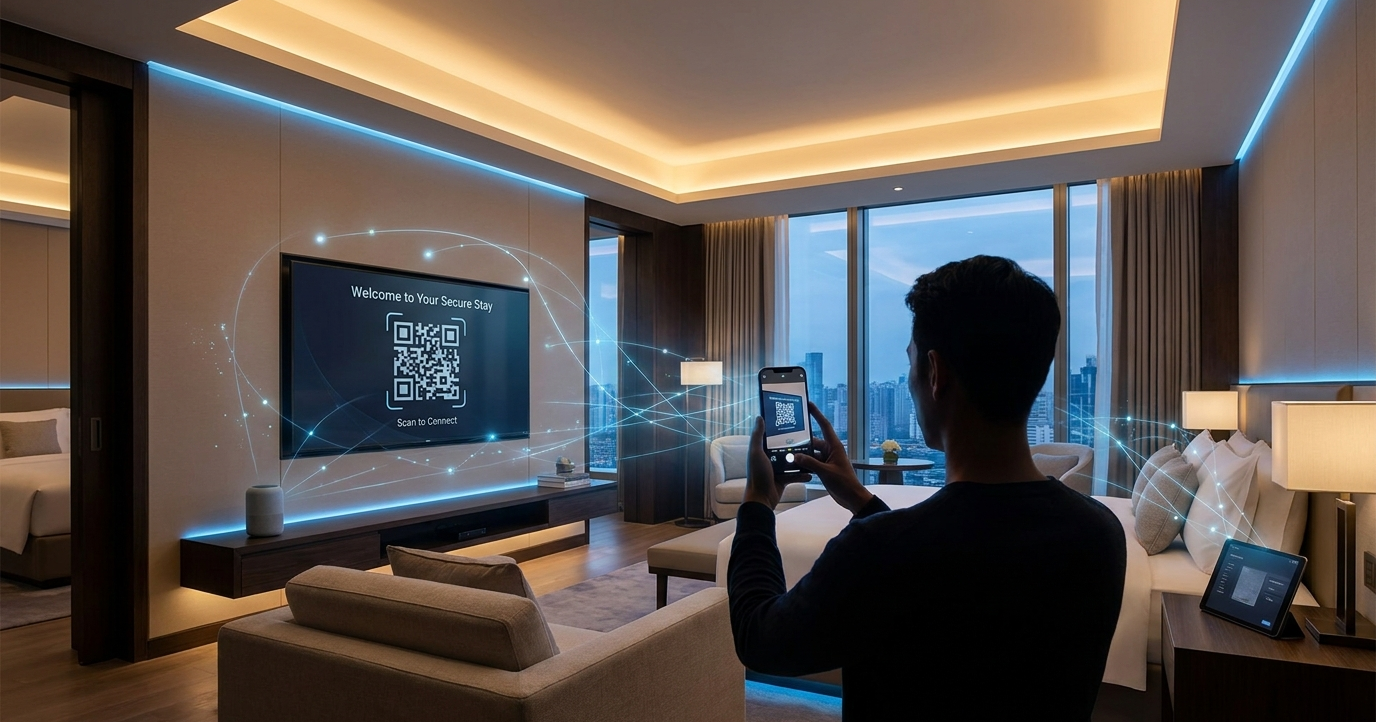
Therefore, practicality of use and security are the two real problems that must be addressed with technologically innovative and effective solutions. In this sense, there is now the possibility of creating WiFi networks in the hotel to which the user can connect through a dynamic key assigned to each guest, which can be used only for the duration of the stay and with which to connect all his devices. Therefore, instead of forcing the guest to go through a captive portal through the manual selection of an “open” network, the system assigns a unique Wi-Fi key, intended for connecting an encrypted network, dynamically associated with the specific reservation or room. This key creates a real Private Area Network (PAN), i.e. a network that for the duration of his stay is reserved exclusively for the guest.
The advantages deriving from this new technology are immediate:
- Total isolation: All guest devices (smartphones, tablets, consoles, baby monitors) communicate with each other securely and are completely isolated from the traffic of other hotel guests.
- “Like at Home” experience: The guest can stream from their phone to the bedroom TV or connect their console in total simplicity, just like they would in the living room at home.
The real strength of this approach lies in the transparent integration between the typical technological platforms of the hotel, i.e. the PMS, the WiFi network and the TVs in the room are harmoniously orchestrated, creating a “frictionless” and safe experience for both the guest and the structure.
For the hotel management and IT team, moving away from the Captive Portal in favor of an orchestrated architecture brings immediate benefits:
- Adaptation of security levels: Guest traffic is encrypted and segregated for each room.
- Zero operational load: Credential management is fully automated.
- Regulatory compliance: Connection data remains tracked according to current regulations, without burdening the hotel’s local infrastructure.
Overcoming the captive portal model and open WiFi networks therefore means responding to the new connection needs of customers in the hospitality business and implementing new technologies capable of offering concrete solutions to the growing demand for security of wireless networks.